Functions for handling Models. More...
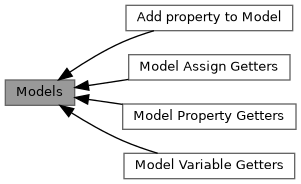
Modules | |
| Model Variable Getters | |
| Functions for getting Variables from a Model. | |
| Model Assign Getters | |
| Functions for getting Assigns from a Model. | |
| Model Property Getters | |
| Functions for getting Properties from a Model. | |
| Add property to Model | |
| Functions for adding Properties to a Model. | |
Macros | |
| #define | NUXMV_VALID_MODEL(model) ((model).repr != NULL) |
| Valid model. | |
Functions | |
| nuxmv_model | nuxmv_create_model (nuxmv_env env, nuxmv_module module, const nuxmv_expr *params, size_t param_num) |
| Create a new model instantiating a module with the desired parameters. | |
| nuxmv_model | nuxmv_create_model_from_string (nuxmv_env env, nuxmv_model_format fmt, const char *data) |
| Create a model from a string. | |
| int | nuxmv_serialize_model_to_string (nuxmv_env env, nuxmv_model model, nuxmv_model_format fmt, nuxmv_serialized_chunk_callback callback, void *user_data, char *data, size_t data_size) |
| Serialize a model to a string. | |
| nuxmv_result | nuxmv_model_check_property (nuxmv_env env, nuxmv_model model, nuxmv_property property, const nuxmv_opt *opts, size_t opt_num) |
| Check the given property on a model. | |
| nuxmv_result | nuxmv_model_check_deadlock (nuxmv_env env, nuxmv_model model, const nuxmv_opt *opts, size_t opt_num) |
| Check for deadlock freedom. | |
| nuxmv_result | nuxmv_model_check_receptiveness (nuxmv_env env, nuxmv_model model, const nuxmv_opt *opts, size_t opt_num) |
| Check for receptiveness to inputs. | |
| nuxmv_status_code | nuxmv_destroy_model (nuxmv_env env, nuxmv_model model) |
| Destroy a model. | |
Detailed Description
Functions for handling Models.
Macro Definition Documentation
◆ NUXMV_VALID_MODEL
| #define NUXMV_VALID_MODEL | ( | model | ) | ((model).repr != NULL) |
Valid model.
This macro checks whether model is a valid nuxmv_model.
- Parameters
-
[in] model The model to inspect.
- Returns
trueif the option is valid,falseotherwise.
Function Documentation
◆ nuxmv_create_model()
| nuxmv_model nuxmv_create_model | ( | nuxmv_env | env, |
| nuxmv_module | module, | ||
| const nuxmv_expr * | params, | ||
| size_t | param_num | ||
| ) |
Create a new model instantiating a module with the desired parameters.
- Parameters
-
[in] env The environment to modify. [in] module The module to instantiate into a model. The module must not be destroyed while the model is still in use. [in] params A list of parameters for the model. If no list shall be used it is safe to use NULL or the result of malloc(0), provided that param_num=0. [in] param_num The number of parameters in the list. If no list shall be passed, use 0 as actual value of param_num.
- Returns
- The newly created model. In case of error, NUXMV_VALID_MODEL() evaluates to
false.
- See also
Requirements: 03.009.03
◆ nuxmv_create_model_from_string()
| nuxmv_model nuxmv_create_model_from_string | ( | nuxmv_env | env, |
| nuxmv_model_format | fmt, | ||
| const char * | data | ||
| ) |
Create a model from a string.
- Parameters
-
[in] env The environment to modify. [in] fmt The format of the input string. [in] data A null-terminated string containing the model data.
- Returns
- The newly created model corresponding to the string. In case of error, NUXMV_VALID_MODEL() evaluates to
false.
- Note
- A current limitation of this function is that it always returns a flattened model, consisting only of a single root module, even if the input string contains submodules. We plan to remove this limitation in future releases.
Requirements: 03.005
◆ nuxmv_destroy_model()
| nuxmv_status_code nuxmv_destroy_model | ( | nuxmv_env | env, |
| nuxmv_model | model | ||
| ) |
Destroy a model.
With this function, the user notifies the environment that the selected model is no more needed.
- Parameters
-
[in] env The environment to modify. [in] model A model to destroy.
- Returns
NUXMV_SUCCESSif the module was destroyed,NUXMV_FAILUREin case of error.
Requirements: 03.004.01
◆ nuxmv_model_check_deadlock()
| nuxmv_result nuxmv_model_check_deadlock | ( | nuxmv_env | env, |
| nuxmv_model | model, | ||
| const nuxmv_opt * | opts, | ||
| size_t | opt_num | ||
| ) |
Check for deadlock freedom.
- Parameters
-
[in] env The environment to inspect. [in] model A model to check the deadlock on. [in] opts A list of options for the check. [in] opt_num The number of options in the list. If no list shall be passed, use 0 as actual value of opt_num.
- Returns
- The result of the checking. In case of error, NUXMV_VALID_RESULT() evaluates to
false.
- See also
Requirements: 02.005
- Attention
- This function has not been implemented, yet.
◆ nuxmv_model_check_property()
| nuxmv_result nuxmv_model_check_property | ( | nuxmv_env | env, |
| nuxmv_model | model, | ||
| nuxmv_property | property, | ||
| const nuxmv_opt * | opts, | ||
| size_t | opt_num | ||
| ) |
Check the given property on a model.
- Parameters
-
[in] env The environment to inspect. [in] property The property to check. [in] model A model to check the property on. [in] opts A list of options for the check. If no list shall be used it is safe to use NULL or the result of malloc(0), provided that opt_num=0. [in] opt_num The number of options in the list. If no list shall be passed, use 0 as actual value of opt_num.
- Returns
- The result of the checking. In case of error, NUXMV_VALID_RESULT() evaluates to
false.
Requirements: 02.001
◆ nuxmv_model_check_receptiveness()
| nuxmv_result nuxmv_model_check_receptiveness | ( | nuxmv_env | env, |
| nuxmv_model | model, | ||
| const nuxmv_opt * | opts, | ||
| size_t | opt_num | ||
| ) |
Check for receptiveness to inputs.
- Parameters
-
[in] env The environment to inspect. [in] model A model to check the deadlock on. [in] opts A list of options for the check. If no list shall be used it is safe to use NULL or the result of malloc(0), provided that opt_num=0. [in] opt_num The number of options in the list. If no list shall be passed, use 0 as actual value of opt_num.
- Returns
- The result of the checking. In case of error, NUXMV_VALID_RESULT() evaluates to
false.
- See also
Requirements: ??
- Attention
- This function has not been implemented, yet.
◆ nuxmv_serialize_model_to_string()
| int nuxmv_serialize_model_to_string | ( | nuxmv_env | env, |
| nuxmv_model | model, | ||
| nuxmv_model_format | fmt, | ||
| nuxmv_serialized_chunk_callback | callback, | ||
| void * | user_data, | ||
| char * | data, | ||
| size_t | data_size | ||
| ) |
Serialize a model to a string.
This function converts the given model into a string representation using the specified format.
The output is written to the provided buffer. When the serialization process fills up the buffer:
- if a callback is not provided, a value equal to or greater than
data_sizeis returned; - if a callback is provided, it is invoked with the user-defined context.
The callback is responsible for handling the data chunk (e.g., copying it elsewhere). If the callback returns false, the process is aborted and the function returns the number of bytes written up to that point.
When the serialization process is completed successfully, the output buffer contains a null-terminated string and the callback is called, if any.
- Parameters
-
[in] env The environment to inspect. [in] model The model to serialize. [in] fmt The format to use for serialization. [in] callback Optional callback function invoked whenever the buffer is full or the serialization process is completed. [in] user_data User-defined context passed to the callback. [out] data The buffer where the serialized model will be stored. [in] data_size The size of the data buffer.
- Returns
- The total number of bytes written, including the terminating null byte, upon successful completion;
- a value equal to or greater than
data_size, if no callback is provided and the serialized model was truncated; - the accumulated number of bytes for all successful calls of the
callback, if thecallbackeventually requests to stop; -1in case of error.
Requirements: 03.002